In the Islamic tradition, seeking knowledge and creating beauty are not merely intellectual activities; they are also forms of worship. From the very beginning, Islam has encouraged humanity to observe the universe, reflect upon its laws, and see the cosmos as a reflection of the Creator’s art.
The intellectual foundation of Islamic civilization lies in the verses of the Qur’an that invite human beings to contemplate the universe. From this perspective, science is the effort to discover the “signs” (āyāt) scattered throughout the universe.
The Qur’an continually calls human beings to reflect and observe: “Do they not look at the camel, how it was created? And at the sky, how it was raised? And at the mountains, how they were erected?” (Qur’an, 88:17–19). This divine invitation encouraged Muslim scholars to carry out pioneering work in fields such as optics, medicine, algebra, and astronomy.
The Prophet Muhammad (peace and blessings be upon him) emphasized the sacredness of knowledge by saying, “Seeking knowledge is an obligation upon every Muslim.” This command helped usher in the Islamic Golden Age, during which thinkers such as Ibn al-Haytham (the father of modern optics) and Ibn Sina combined empirical observation with philosophical depth.
If science is the study of the laws of creation, art is the celebration of the harmony created by those laws. In Islamic art, an aesthetic that reminds the individual of the “Infinite” prevails rather than an understanding that glorifies the individual.
The geometric patterns frequently encountered in Islamic architecture represent the concept of Tawhid (the oneness of Allah). The endless repetition of these patterns symbolizes that although the universe is boundless, it comes from a single source and forms a whole.
The art of calligraphy, which developed as a means of preserving the Qur’an, is the pinnacle of Islamic art. It is not merely writing; it is giving physical form to the sacred word. A calligrapher uses the reed pen as an instrument of worship, ensuring that the beauty of the text matches the depth of its content.
A hadith states, “Allah is beautiful and loves beauty.” This perspective transformed everyday life, architecture, and handicrafts, turning even functional objects into mirrors of elegance and balance.
The synthesis of science and art in Islamic civilization offers a unique worldview in which faith and reason do not conflict but rather complement one another. This understanding invites human beings to see, in a mathematical formula or an intricate tile pattern, the power of the Creator who designed the universe with purpose and precision.
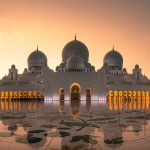
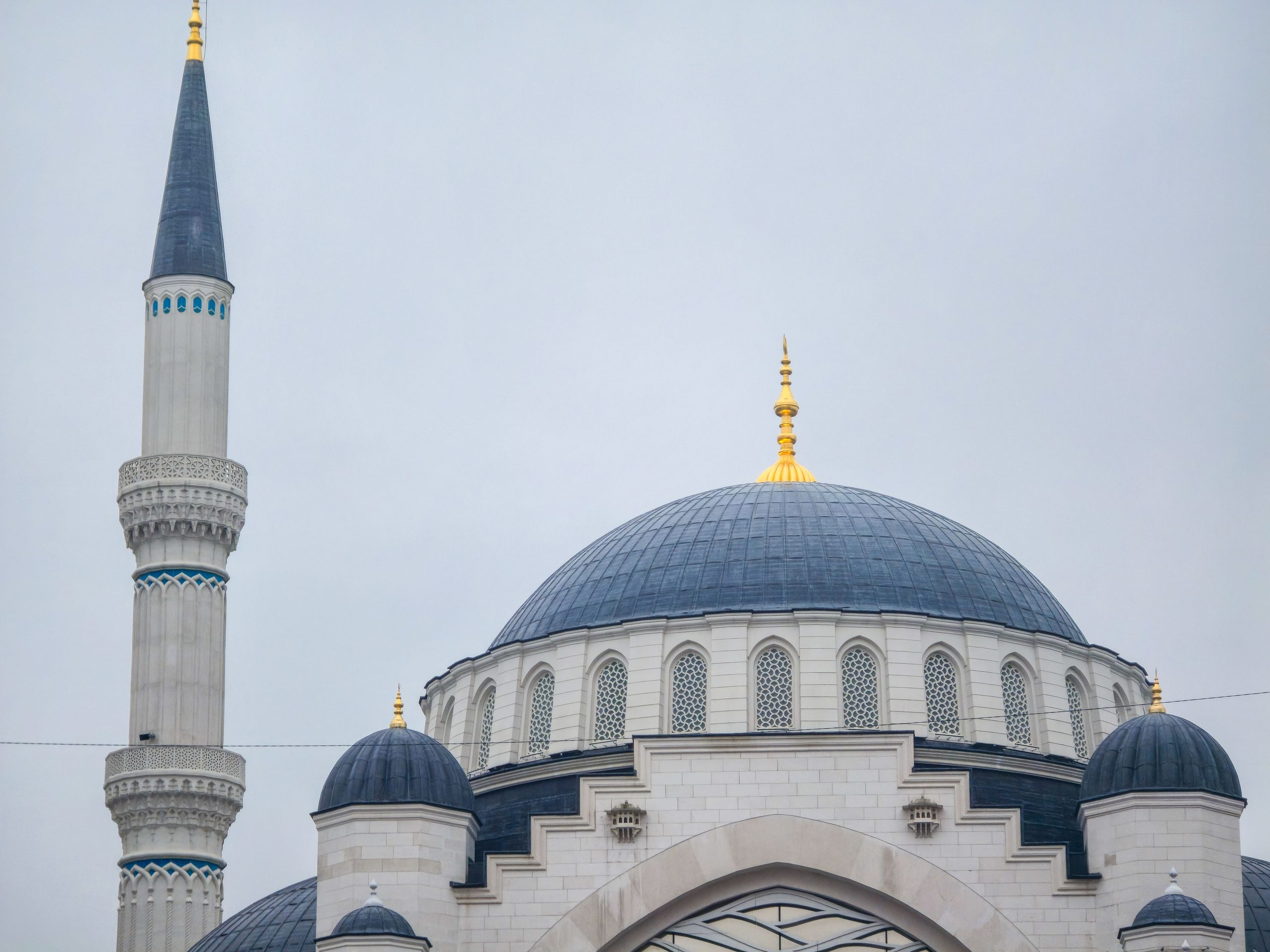
Whether in the precision of an astrolabe or the symmetry of a mosque dome, the message is the same: to understand the universe is to appreciate the Creator; to create beauty is to honor the source of all existence.