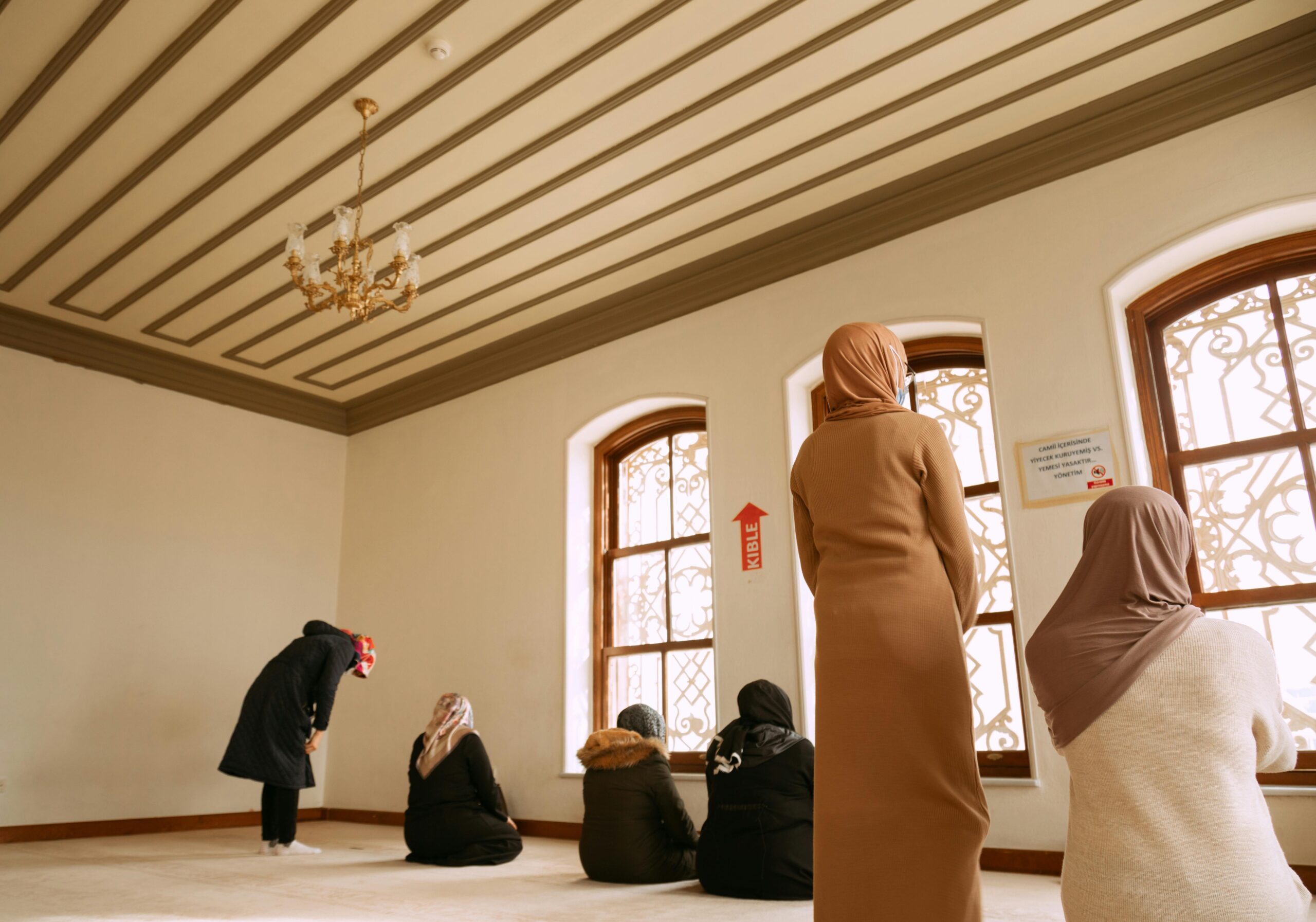
One of the most widely discussed topics about Islam around the world is the position of women in society. In contemporary debates, it is often claimed that Islam places women in a secondary position. However, a significant portion of these evaluations arises from attributing historical practices or local cultural traditions to the religion rather than examining Islam’s foundational sources. In order to evaluate a religion in a sound and balanced way, it is necessary to look at its primary texts. In the case of Islam, these sources are the Qur’an and the teachings of the Prophet Muhammad. When these texts are examined, it becomes clear that Islam’s approach to women is often quite different from the perception commonly presented in public discourse.
In seventh-century Arabia, where Islam first emerged, the social status of women was quite limited. Women often had no inheritance rights, their economic independence was not recognized, and in some cases marital relations could involve serious injustices. In this environment, the Qur’an introduced regulations that defined the legal status of women. Indeed, the Qur’an clearly states that women are entitled to a share of inheritance: “For men is a share of what the parents and close relatives leave, and for women is a share of what the parents and close relatives leave” (Qur’an 4:7). Considering the social structure of that period, this provision represented a significant legal reform.
According to the Qur’an, women and men are created from the same origin in terms of human value. The verse, “O mankind, fear your Lord, who created you from a single soul and created from it its mate” (Qur’an 4:1), demonstrates that the ontological value of human beings does not change according to gender. In Islam, superiority is not based on gender but on morality and responsibility. The Qur’an expresses this principle as follows: “Indeed, the most honored of you in the sight of God is the most righteous among you” (Qur’an 49:13).
In the Islamic understanding of humanity, women and men are equal in terms of spiritual responsibility. In the Qur’an, believing men and believing women are mentioned together: “The believing men and believing women are allies of one another; they enjoin what is right and forbid what is wrong” (Qur’an 9:71). Another verse states that believing men and women will receive the same spiritual reward: “God has promised believing men and believing women gardens beneath which rivers flow” (Qur’an 9:72). This perspective demonstrates that religious responsibilities and spiritual values are not limited by gender.
Regarding marriage, the Qur’an emphasizes the principle of mutual responsibility and respect. It describes spouses as a source of protection and security for one another: “They are a garment for you, and you are a garment for them” (Qur’an 2:187). This expression indicates that marriage is based not on a relationship of power but on mutual trust and closeness. Furthermore, the Qur’an places great importance on justice in marriage and, concerning polygamy, gives the warning: “But if you fear that you cannot deal justly, then marry only one” (Qur’an 4:3).
Concerning women’s place in society, the Qur’an does not place moral responsibility solely on women. The principle of modesty and moral conduct is first addressed to men: “Tell the believing men to lower their gaze and guard their chastity” (Qur’an 24:30). The same principle is then expressed for women as well (Qur’an 24:31). This approach shows that moral responsibility is a social principle that applies to both genders.
The teachings of the Prophet Muhammad also clearly emphasize treating women well. The Prophet said: “The best of you are those who are best to their wives.” In another hadith, he advised believers to be compassionate toward women and specifically urged that their rights be respected. In the Islamic tradition, the position of the mother is also highly honored. When the Prophet Muhammad was asked who deserved the greatest kindness, he replied three times, “your mother,” and then said, “your father.” This narration illustrates how highly family devotion and sacrifice are valued.
In the early period of Islam, women played active roles not only within the family but also in social life. Khadijah, the Prophet’s wife, was a successful merchant and provided significant economic support during the early years of Islam. Aisha, another prominent figure, is regarded as one of the most important sources of knowledge in the fields of hadith and Islamic law. These examples demonstrate that women were able to take active roles in education and the production of knowledge in the early Islamic community.
Today, some restrictions imposed on women in certain Muslim societies often stem not from the core teachings of the religion but from historical interpretations or local traditions. When the principles set forth in the Qur’an are examined, women are described as individuals who are equal to men in terms of human dignity, possess economic rights, bear spiritual responsibility, and are capable of contributing to social life.
In conclusion, the primary sources of Islam present a framework aimed at protecting the dignity and rights of women. When the Qur’an and the teachings of the Prophet Muhammad are examined, it becomes evident that women are not portrayed as inferior; rather, they are granted a strong status in terms of human dignity, respected family roles, and social responsibility. In order to properly evaluate the issue of women in Islam, it is necessary to distinguish between the principles presented in religious texts and the practices that have emerged in different societies throughout history. When this distinction is made, it becomes clear that Islam’s perspective on women is often far more comprehensive and balanced than commonly assumed.